April & May 2026 – Planning your visit? Check our Visitor Notices for opening times, upcoming closures and important accessibility updates. Click here to view
Cathedral Window Named Finalist Among England’s Favourite Stained Glass
Published January 2026
The stained-glass windows of England’s cathedrals illuminate their interiors, convey religious and cultural stories, and perhaps offer a glimpse of heaven.
Janet Gough OBE’s Divine Light: The Stained Glass of England’s Cathedrals tells the remarkable story of these treasured works, featuring glass from every Church of England cathedral. Each window in the book was showcased over 45 days on the Association of English Cathedrals’ website and social media, spanning Advent, Christmas and beyond.
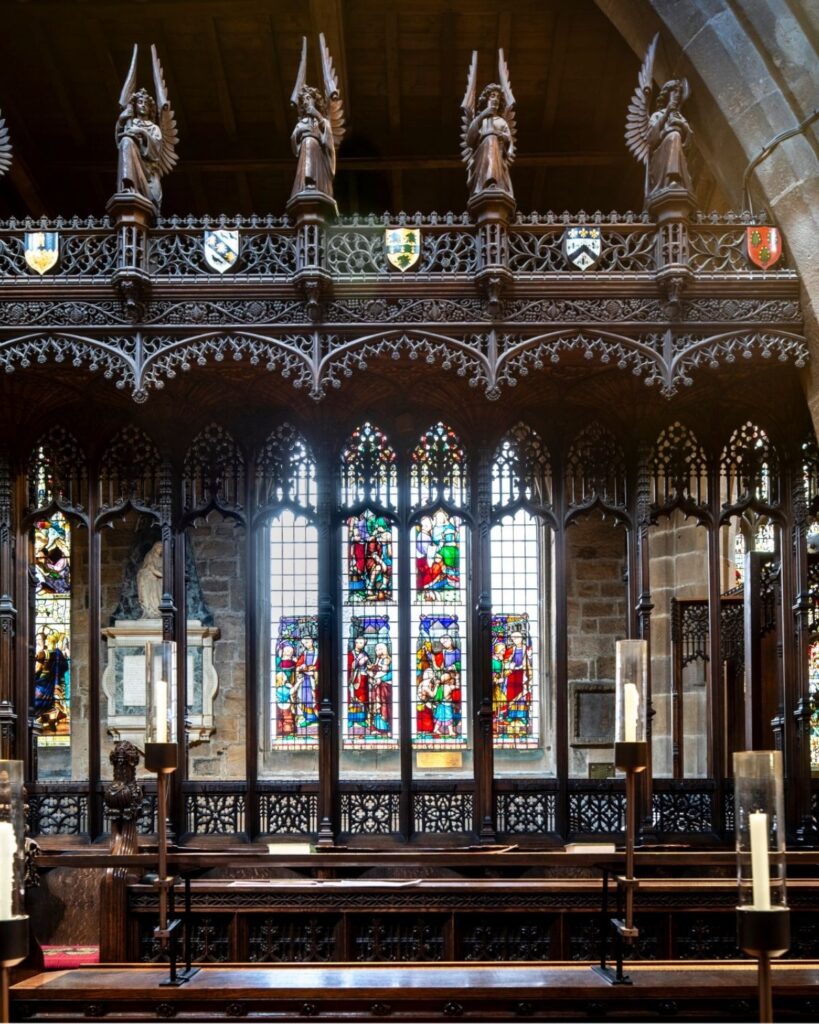
We’re thrilled that our Chemist’s Window has now made the Top 12 in a public vote for England’s favourite cathedral stained glass. Modest in size and design compared to others, it conveys a powerful message of service and compassion.
Voting closes at 12 noon on Sunday 1 February 2026.
The article below about Newcastle Cathedral’s Chemist’s Window is kindly shared by the Association of English Cathedrals. It is based on a 2023 sermon by the Cathedral’s former Revd Canon Peter Dobson.
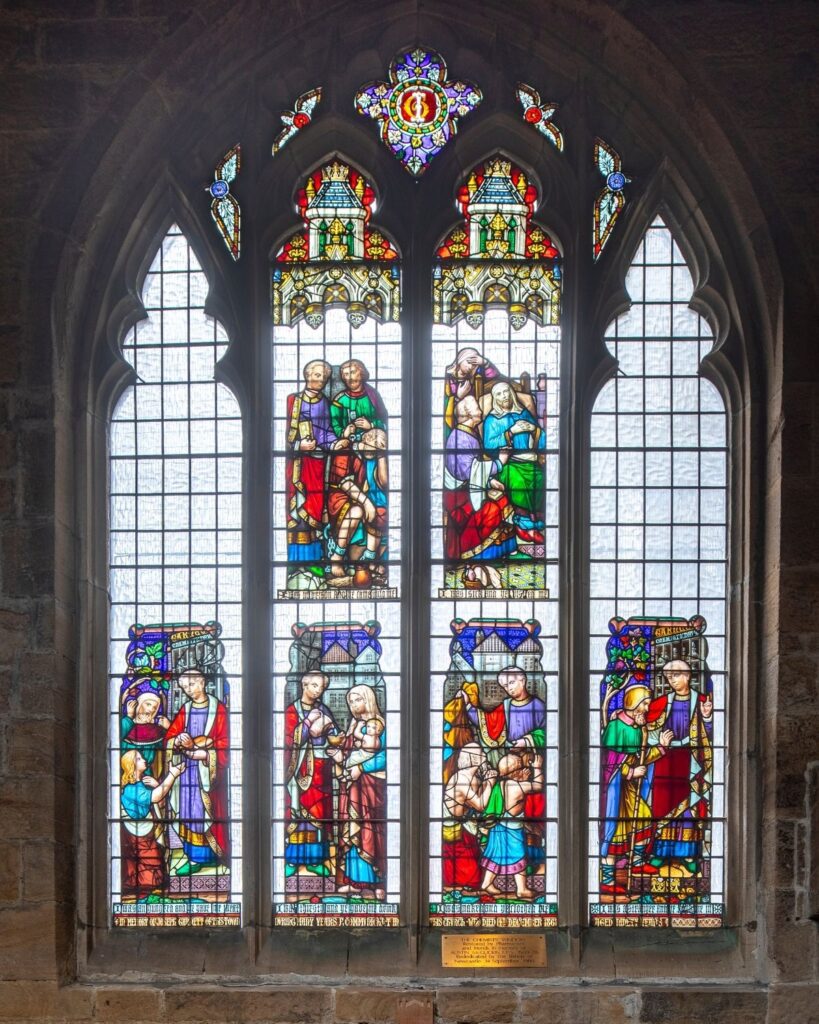
The so-called ‘Chemist’s Window’, dedicated to Joseph Garnet, may appear unremarkable at first glance, but a remarkable story lies behind it.
Garnet, a chemist with a shop on a nearby street called Side, was a devoted member of St Nicholas’s Church (now Newcastle Cathedral). He passed away in 1861, and only after his death did the full extent of his quiet philanthropy become known. Garnet had used his time and resources to help many in need, and in recognition of his selflessness his friends – who had worshipped at St Nicholas’s alongside him – raised funds for a window in his memory.
The window’s design is inspired by the Parable of the Sheep and the Goats from the Gospel of Matthew (25:31–46), where Jesus teaches that judgment will be based on how we have served the poor, hungry and imprisoned – on whether we have seen Christ in the least among us.
What makes the ‘Chemist’s Window’ striking is that the face of the person helping those in need is always that of Joseph Garnet himself. The backdrop includes his chemist’s shop and the street where he lived.
The window was created in the studio of William Wailes, a prominent artist whose stained-glass workshop in Newcastle was one of the largest and most prolific in England. The window was removed after being damaged during enemy action in 1941 and was subsequently held in storage, with some considering its sale in 1973. But in 1980, the Pharmaceutical Society sponsored the window’s reinstatement, which was overseen by the Cathedral architect, Ronald G. Simms. The glass was reset and placed against clear leaded glazing.
The window’s powerful scenes challenge us to reflect: could we place our own faces and our own streets in this narrative of service and compassion?
The Dean of Newcastle, the Very Revd Lee Batson, says: “Unlike some of the grand and more famous windows in the competition, the Chemist’s Window tells the story of an ordinary person walking and working alongside those in need – the poor, the hungry and the imprisoned.
“It is comparatively modest in appearance, but it carries a powerful message about faith lived out quietly through kindness and generosity.”
Reflecting on the window’s continuing relevance, the Dean adds, “Today, Newcastle Cathedral continues this tradition of walking and working alongside those facing difficult circumstances. Through our Cathedral Lantern Project, we help signpost visitors experiencing homelessness and other challenges to specialist support services across the city.
“Café 16, in the Cathedral Refectory, is operated by the Oswin Project, supporting prison leavers as they rebuild their lives and develop careers in hospitality. We’ve also hosted services and initiatives for people facing addiction, bereavement and mental health difficulties.”
Divine Light – The Stained Glass of England’s Cathedrals, by Janet Gough OBE, is published by Kulturalis with photos by Andy Marshall.
Through our Cathedral Lantern Project, we connect people experiencing homelessness with support. Café 16, run by the Oswin Project, supports prison leavers, and we host a range of initiatives for those facing life’s challenges.